
Purpose of Measuring Organizational Integrity in Modern Business
Measuring organizational integrity has become a defining factor in how modern companies sustain trust and relevance in competitive markets. Businesses are no longer judged only by profitability, but also by how consistently they uphold ethical behavior across all levels. Customers, employees, and stakeholders are increasingly attentive to whether companies genuinely act in alignment with their stated values. Integrity influences everything from brand reputation to employee engagement and customer loyalty. When integrity is strong, it creates a stabilizing force that helps organizations navigate uncertainty and change. When it is weak, even high-performing companies can experience reputational damage and internal dysfunction.
In today’s interconnected environment, information spreads quickly, making transparency more important than ever. Organizations that ignore ethical alignment often face long-term consequences that outweigh short-term gains. Integrity also plays a direct role in talent retention, as employees prefer to stay in workplaces where fairness and honesty are consistent. Beyond internal benefits, integrity strengthens external partnerships and investor confidence. A company that prioritizes ethical behavior builds a foundation for long-term sustainability rather than short-lived success.
Understanding What Company Integrity Really Means
Company integrity goes beyond compliance rules or written codes of conduct. It reflects how values are lived out in everyday decisions, interactions, and leadership behavior. A company may have strong mission statements, but true integrity is measured by how consistently those values are demonstrated under pressure. Employees often assess integrity not by official policies, but by what leaders do when difficult choices arise. This makes consistency between words and actions a central pillar of organizational trust.
Integrity also involves the alignment between different departments and leadership levels. If leadership promotes transparency but middle management operates inconsistently, the organization experiences cultural fragmentation. Employees are quick to recognize gaps between stated values and real behavior, which can erode morale. Integrity is therefore not a static concept but an ongoing practice that requires reinforcement at every level. It is both cultural and behavioral, shaping how decisions are made and how people are treated within the organization.
Core Dimensions That Shape Corporate Integrity
Corporate integrity is built on several interconnected dimensions that define how an organization operates internally and externally. Ethical decision-making is one of the most critical elements, ensuring that choices are guided not only by profitability but also by fairness and responsibility. Transparency in communication is another essential pillar, allowing employees and stakeholders to understand how and why decisions are made. Accountability systems ensure that individuals and teams take responsibility for their actions rather than shifting blame.
Fairness in treatment, whether in hiring, promotions, or customer interactions, reinforces trust across the organization. Consistency between promises and actions further strengthens credibility, particularly in customer-facing environments. Governance structures also play a role by providing clear frameworks for ethical oversight. When these dimensions are aligned, they create a strong foundation for organizational integrity. However, when even one dimension is weak, it can affect the overall perception of the company’s ethical standing.
Why Traditional Metrics Fail to Capture Integrity
Traditional business metrics often focus on financial performance, productivity, and operational efficiency. While these indicators are important, they do not fully capture the ethical health of an organization. A company may show strong revenue growth while simultaneously struggling with internal trust issues or inconsistent leadership behavior. Surveys alone also fail to provide a complete picture, as employees may hesitate to express honest opinions due to fear or uncertainty.
Another limitation of traditional metrics is that they often rely on surface-level data rather than behavioral insights. Written policies may suggest high ethical standards, but actual workplace behavior may differ significantly. This creates a gap between perception and reality, making it difficult for leadership to identify underlying issues. Integrity requires a deeper level of evaluation that includes qualitative insights, behavioral patterns, and cultural signals. Without this broader perspective, organizations risk overlooking critical areas of improvement.
How to Prepare for Integrity Evaluation Across Your Organization
Preparing to evaluate organizational integrity requires a structured and thoughtful approach. Leadership teams must first identify key stakeholders who will participate in the assessment process, including employees, managers, customers, and external partners. Gathering diverse perspectives ensures that the evaluation reflects the full reality of the organization rather than a limited viewpoint. It is also important to establish clear behavioral expectations before beginning the assessment.
Organizations should collect both qualitative and quantitative data to gain a balanced understanding of ethical behavior. This includes interviews, anonymous feedback systems, and performance observations. Consistency across departments is essential to ensure that evaluation standards are applied fairly. Establishing a baseline helps organizations measure progress over time rather than focusing on isolated data points. Preparation also involves creating a safe environment where honest feedback is encouraged and valued.
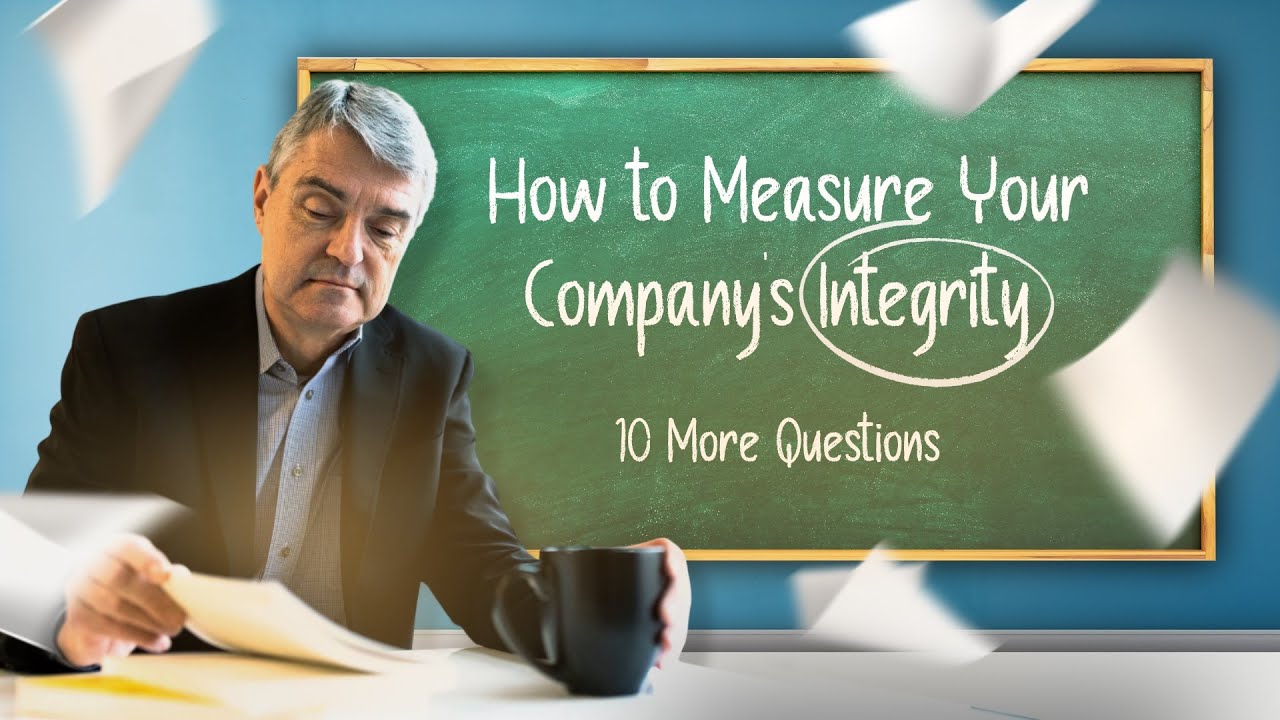
How to Measure Your Company’s Integrity: 10 More Questions
Measuring integrity requires asking the right questions that reveal how values are truly practiced within an organization. These questions help uncover gaps between stated principles and actual behavior. They also provide insight into leadership effectiveness, employee trust, and cultural consistency. When used consistently, they can become a powerful tool for organizational reflection and improvement.
Below are ten essential questions that help evaluate integrity across different dimensions of a company:
Key Integrity Assessment Questions
-
Do employees feel safe reporting ethical concerns without fear of retaliation?
-
Are company values reflected in leadership decisions under pressure?
-
How consistently are commitments made to customers fully delivered?
-
Are promotions and rewards perceived as fair and transparent?
-
Do employees clearly understand how ethical decisions are made?
-
Are mistakes acknowledged openly rather than hidden?
-
Is there alignment between marketing messages and customer experience?
-
Do managers apply company policies consistently and fairly?
-
How often are ethical guidelines reviewed and updated?
-
Do employees believe leadership prioritizes integrity over short-term gains?
These questions should be used in leadership discussions, internal audits, and employee feedback systems. They are most effective when combined with open dialogue rather than rigid scoring systems. Each question reveals a different layer of organizational behavior and helps identify areas that may require improvement. Over time, repeated use of these questions can reveal patterns that indicate cultural strength or weakness. Organizations that engage with these questions honestly are more likely to build sustainable trust internally and externally.
Interpreting Responses to Integrity Assessment Questions
Once responses to integrity questions are gathered, the next step is to interpret the data thoughtfully. Patterns across departments often reveal whether integrity is consistently practiced or unevenly applied. For example, if employees in one department feel safe reporting issues while others do not, this indicates a cultural imbalance. Leadership should pay close attention to discrepancies rather than focusing only on overall averages.
It is also important to recognize subtle indicators of misalignment, such as hesitation in responses or vague feedback. These signals often point to underlying concerns that may not be openly expressed. Turning qualitative feedback into actionable insights requires careful analysis and open-minded interpretation. Organizations can also develop integrity scorecards to track changes over time. These tools help translate complex cultural dynamics into understandable performance indicators that guide decision-making.
Strengthening Integrity After Evaluation
Improving integrity requires intentional action rather than passive observation. One of the most effective strategies is strengthening accountability systems that ensure ethical behavior is recognized and reinforced. Clear communication channels also help employees feel heard and valued, especially when raising concerns. Training programs focused on ethical decision-making can further reinforce organizational values across all levels.
Leadership behavior plays a crucial role in shaping organizational integrity. When leaders consistently model ethical behavior, it sets a standard for the rest of the company. Recognition systems that reward integrity-driven decisions can also reinforce positive behavior. Organizations should continuously evaluate whether their internal processes support or hinder ethical alignment. Strengthening integrity is an ongoing process that requires commitment and consistency.
Common Barriers to High Organizational Integrity
Several barriers can prevent organizations from achieving strong integrity standards. One of the most common is pressure to meet short-term performance targets, which can sometimes lead to unethical shortcuts. Misalignment between leadership and operational teams can also create confusion and inconsistency in decision-making. Without clear ethical guidelines, employees may struggle to understand expected behavior.
Weak reporting structures can further discourage employees from raising concerns. In some cases, small unethical behaviors become normalized over time, gradually eroding organizational culture. These issues often develop slowly and may go unnoticed until they significantly impact performance or reputation. Addressing these barriers requires proactive leadership and continuous cultural evaluation. Organizations must remain vigilant to ensure that integrity remains a priority even during periods of rapid growth or change.
Building a Long-Term Integrity Framework
A long-term integrity framework ensures that ethical behavior is embedded into the foundation of the organization. This involves creating measurable benchmarks that align with company values and operational goals. Integrity should also be integrated into performance evaluations so that employees are assessed not only on results but also on how those results are achieved.
Continuous feedback loops allow organizations to adapt and improve their ethical practices over time. Hiring practices should also reflect organizational values to ensure cultural alignment from the start. As companies grow, maintaining integrity becomes more complex, making structured frameworks even more important. A strong integrity system supports resilience, trust, and long-term success in a constantly evolving business environment.
FAQ
What is the best way to evaluate company integrity?
The most effective approach combines behavioral questioning, employee feedback, leadership observation, and cultural analysis. Relying on a single method is not sufficient.
Can integrity be measured objectively?
Integrity can be partially measured through structured tools, but it also requires qualitative interpretation to fully understand behavioral patterns.
How often should companies assess integrity?
Most organizations benefit from conducting integrity evaluations on a quarterly or semi-annual basis, depending on size and complexity.
Who should oversee integrity measurement?
Leadership teams, HR departments, and compliance officers typically share responsibility for monitoring and evaluating integrity standards.
What actions should follow a poor integrity assessment?
Organizations should implement corrective action plans, improve communication systems, reinforce training, and address leadership inconsistencies.
Takeaway
Measuring organizational integrity is not a one-time activity but an ongoing commitment to aligning values with actions. The effectiveness of any company depends not only on what it achieves but also on how those achievements are reached. By consistently using structured questions and evaluating behavioral patterns, organizations can identify gaps that might otherwise remain hidden. Integrity strengthens trust, improves workplace culture, and supports long-term business sustainability. Companies that prioritize ethical alignment are better equipped to handle challenges, retain talent, and maintain strong reputations in competitive markets.
Read More: https://thesaleshunter.com/how-to-measure-your-companys-integrity-10-more-questions/